
It is the year 2022… and by now, most people know the extensive benefits of physical activity for individuals of all ages (Centers for Disease Control and Prevention [CDC], 2021). Schools, in particular, seem to be aware that they need to take a more holistic approach to the education of children that includes physical activity opportunities before, during, and after the school day, built upon a foundation of quality physical education (CDC, 2019; Dauenhauer & Stoepker, 2022; Slade, 2020). Physical activity, after all, offers myriad health benefits for youth (Janssen & Leblanc, 2010) and can also contribute to improved academic performance (Rasberry et al., 2011), so it seems like a no-brainer for schools. Unfortunately, research suggests that schools are still overwhelming sedentary places for kids to be (Egan et al., 2019). The reality is, that we need to do a better job preparing the current and next generation of teachers to systematically integrate physical activity into the school day.

The idea of having a school Physical Activity Leader (PAL), previously referred to as a Director of Physical Activity or Champion of Physical Activity (Carson et al., 2012; Castelli & Beighle, 2007; Stoepker et al., 2021) is not new. Efforts have been made over the years to train teachers and school staff on the knowledge and skills to promote physical activity in schools with mixed results (Carson et al., 2014; Carson et al., 2020). Likewise, many teacher preparation programs around the country have been taking steps to thoughtfully integrate elements of physical activity leadership into their undergraduate and graduate teacher preparation programs (Castelli et al., 2017). It is difficult to know how much these efforts have moved the needle. We do know, however, that we are still not where we want to be in terms of youth meeting daily physical activity recommendations (US Department of Health and Human Services, 2018).
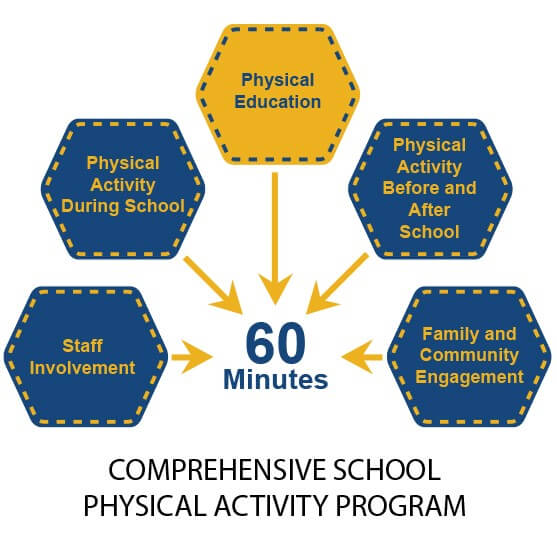
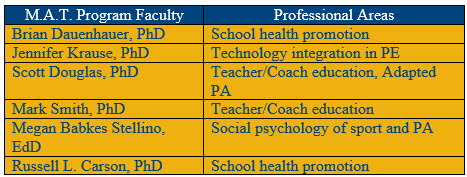 The Sport and Exercise Science faculty (see table) at the University of Northern Colorado (UNC) have answered the call for CSPAP-enhanced teacher preparation programs by reshaping their Master of Arts in Teaching (M.A.T.) program. The M.A.T in Physical Education and Physical Activity Leadership at UNC is one of the first of its kind dedicated to preparing, supporting, and mentoring school champions to effectively implement prolonged CSPAP efforts in and around schools. The two year program is conducted in a convenient hybrid format for working professionals; online courses occur during the fall and spring semesters, and an on-campus two-week summer institute during the summer. The program advances candidates’ knowledge in physical education, while educating them on how to promote school-wide physical activity, coordinate before and after school physical activity opportunities, and increase staff, family, and community involvement. Applications for the first cohort are now being accepted at