Category: PHE Current Issues

This category includes essays and articles on a wide range of topics. Read what’s good and what the challenges are about current teaching and coaching practices, and what physical and health education must do to thrive in the future. It’s a place to share, discuss, and debate ideas. Read and join the conversation.

There’s No Denying: Bad is Bad

If you’ve been following the national news recently, one story that probably caught your eye was the hauling before Congress of a young pharmaceutical CEO named Martin Shkreli. With a smirky smile, Shkreli wisely invoked his 5th Amendment privilege against compulsory self-incrimination, by refusing to justify to legislators his plan to raise the cost of a drug AIDS victims depended upon from $13.50 to $750 a pill – a 5556% increase!
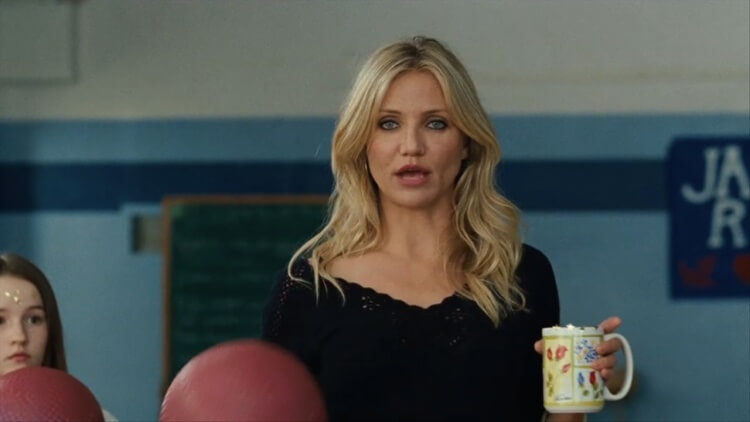
CameronDiazBadTeacherCon
(Source: http://www.reelz.com/trailer-clips/56109/bad-teacher-clip/)

On June 29, 2009, a former chairman of the NASDAQ stock market was sentenced to 150 years in prison. Bernard “Bernie” Madoff, then a private financial investment advisor had pleaded guilty to operating a so-called “Ponzi” scheme amounting to one of the biggest financial frauds in history. Billions of dollars had been fraudulently siphoned off from clients who had entrusted Madoff with their financial futures and whose lives he’d ruined.

Despite the honest efforts that most people put into their work lives, we’re all aware of people who choose to cheat, copy, lie, steal, and deceive. Their stories like those above sometimes make national news but often not. When we do things that are illegal we risk being punished. But if we don’t break any laws there’s a lot we can get away without reproach. That is unless someone calls us on it, holds us accountable and starts questioning the consequences of our actions. Not surprisingly, most people are reluctant to do this. Especially if it risks rocking the boat and making waves people around us find uncomfortable. And so it is with physical education.

Despite the valiant efforts of thousand of physical educators to do what’s best for the kids they serve, few of us don’t know or even work with teaching colleagues whose jobs are a fraud. They organize rather than teach, they aren’t interested much in helping their students love being physically active and wanting to stay healthy, are not concerned about staying updated professionally, and are content to serve as a rich source of inspiration for the never-ending-stream of gym-teacher jokes. They, like Shkreli and Madoff are quite simply bad at what they do. It may not be illegal. But without doubt it is a fraud.


Get HyPE: Using Wordle for Teacher Reflection

As part of the teacher evaluation process in my school district, students are administered mid-year client surveys (student perception surveys) in specific classes. The surveys are a combination of free-response and quantitative (Likert scale) questions. Students complete the surveys online with a proctor, and the process takes about five minutes.

According to Hanover Research, “student surveys are a reliable measure of teacher effectiveness,” and “student ratings [are] significantly more accurate in predicting student achievement than teacher’s self-ratings, principal ratings, and principal summative ratings.” What our students have to say about our teaching is incredibly valuable. They see (and hear) it all.

How can we effectively sort through our students’ comments so they help us improve our teaching practice? Where do we begin? Do we focus on the negative comments, the things we might change or improve, or the positive comments, the things we already do well?

I met with my supervising principal last week to discuss my survey results. He explained that many teachers dwell on the negative comments and have trouble looking past them. He came up with an idea to help the teachers he advises focus on the positive things their students said about them. Using Wordle, he created a word cloud with all of the responses to the question, “I learn best when my teacher.” and printed it out in color.

Rethinking Physical Education Programs with Common Core State Standards in Mind

More and more states are adopting the Common Core State Standards (CCSS) while the student population, in the United States, is rapidly becoming more diverse. The CCSS aim to prepare students for College and Career Readiness (CCR). As the new direction of today’s educational reform, CCR is defined as the preparation of high school graduates to enter college courses and/or workforce-training programs (Mills, 2012) successfully. The CCSS intend to set consistent expectations for all students across states. Individual districts or schools however, are still responsible for designing content, instructional strategies and assessments in order to meet these expectations.

Literacy and mathematical skills are a primary focus of the CCSS and technical subjects -physical education and art – are expected to support and promote such skills. Thus, the CCSS evoke the need for a more cross-disciplinary educational approach requiring more explicit instructions regarding reading, writing, speaking, listening as well as critical thinking and problem solving skills, by all educators. In other words, infusing the above components into physical education programs is no longer a choice but rather a requirement.

Commonly, most high-quality physical education programs do provide opportunities for students to develop motor, cognitive and social skills (Sibley & Etnier 2003; Etnier et al., 1997) along with problem solving, collaboration and communication skills. The expectation implicit in CCSS however, of physical education promoting and supporting mathematics and literacy, puts a greater challenge upon PE programs. Already many physical educators are battling to keep larger size classes of students appropriately engaged in health-enhancing levels of physical activity.

This article points out how a high-quality physical education programs could -if it is not doing so already – promote and support CCR and meet CCSS. With the implementation of commonly used methods and approaches, and the willingness to re-think physical education programs with a multidisciplinary lens, the CCSS could be an attainable challenge.

Addressing the Activity Gap

Most teachers I know are always looking for ways to improve their practice so they can better serve their students. We strive to develop more effective assessments, more engaging lessons, better classroom management techniques, stronger interpersonal relationships, the list goes on endlessly.

When I reflect on my own teaching and try to answer the question “How can I better serve my students?” I find myself challenged with a related question, “Where should I strive to have most impact?” Should it be in the gym and on the fields, or on the streets and in the yards?

I have always been a firm believer that a strong physical education program (among many things) serves as the foundation for a healthy life, but wonder whether my teaching reflects this. It is easy to say that PE can provide the foundation for healthy living, it is even cliché to a degree, but I still wonder, “Am I truly teaching all of my students how to do it?”

Now that the New Year’s Resolutions have Come and Gone…What’s Your Line?

By now, many of our New Year’s resolutions have come and gone. Good intentions don’t have the best track record when it comes to longevity. Well meaning ideas don’t always last. That being said, what is it that we can do to keep our students and us motivated for the long haul?

Most of us work hard to present physical activity to our kids in ways that connect with them. Ultimately, we want our kids to take ownership of their own fitness and to find the best way that they can use it to be healthy and productive people, no matter their age. But teaching them to how to motivate themselves can sometimes be challenging.

Few teachers don’t have “go-to sayings” that they fall back on in their classes. These expressions speak to the heart of our programs. Goodness knows that if you are looking for these, a quick Google search will overwhelm you with options. However, rather than risk asking you to do something like that, I’ve found a few phrases that have stood the test of time for me no matter what I happen to be teaching at the time. See what you think.

The first is a staple of mine that I introduce to my students on the very first day every September:

Healthy Hearts Lead to 50 Million Strong Kids!

(This essay was originally published on SHAPE America’s member Exchange [February, 2016] and is reprinted with permission.)

February is Heart Month. Time again for America’s physical educators and health educators to celebrate the value of what we do best: keeping kids healthy.  In our increasingly sedentary and fast-food-focused world, cardiovascular disease remains the nation’s leading cause of death. It’s estimated close to 1 million lives are lost annually, which represents about one of every 2.5 US deaths. None of us remain untouched.

Because many of these deaths are the result of poor lifestyle choices they are often preventable. Inactivity, poor nutrition and tobacco use are chief among the causes, which makes the work of health and physical educators top among the solutions.

Can Health and Physical Education Avoid a Kodak Moment?

Remember when a family member or friend excitedly shouted, “Kodak Moment!” They’d whip out a camera, quickly gather people together and cement a memory of the occasion on film. It’s not uncommon to hear the same expression today but in an entirely different context.

kodak

Kodak has a fascinating history. It was back in 1888, when chemist George Eastman flipped the world of photography. His invention of consumer cameras and roll film transformed photo taking from a small, complicated, specialized profession to a hobby for everyone. Eastman and the Rochester NY company he created, successfully dominated the world of photography for close to a century.

But then something unanticipated happened. In 1973, Kodak hired Steven Sasson a bright, young 24-year old engineer. Uncertain how best to use his talents they offered him a couple of options. Sasson chose to investigate a newly emerging technology that promised to transform electrical signals into images. Two years later, he proudly demonstrated his creation in front of Kodak’s bosses: The world’s very first digital camera. Sasson predicted that digital photography would within about 20 years replace traditional cameras, film, and prints.