Category: PHE Current Issues

This category includes essays and articles on a wide range of topics. Read what’s good and what the challenges are about current teaching and coaching practices, and what physical and health education must do to thrive in the future. It’s a place to share, discuss, and debate ideas. Read and join the conversation.

What’s Ahead for Physical Education and Health Education in 2016?

Writing this the day after Xmas, I can’t help but think about the past year and imagine what’s ahead. Most of us I suspect do the same every year. We think about the joy and sadness we’ve experienced in our jobs and family in the year just ending, and wonder what awaits us in the New Year.

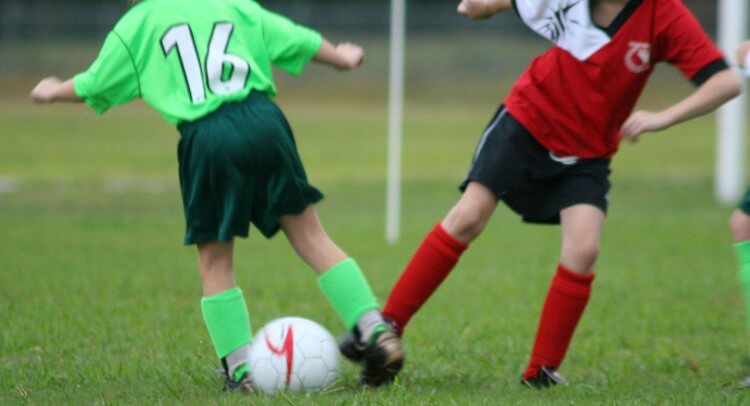
Kids playing soccer

For health educators and physical educators, 2015 ended on an upbeat note. After more than a decade outside of the “core” curriculum, we were included as part of a “well rounded education” in the recently passed Every Student Succeeds Act(ESSA). Its predecessor, No Child Left Behind (NCLB) sadly resulted in not only leaving academically behind millions of students, but also health and physical education.

NCLB although well intentioned, justified school administrators making program and position cuts to our subjects in the name of academic accountability. Noticeably no one’s celebrating much about the success of this focus, while the evidence is clear that the majority of young people fail to lead physically active and healthy lives.

Be a 50 Million Strong by 2029 Champion

As physical educators, we have many opportunities to improve the lives of thousands of kids who participate in our school physical education programs. If we are diligent in improving our programs by focusing on lifelong health and physical activity with our students, we can all do our part in succeeding with “50 Million Strong.”

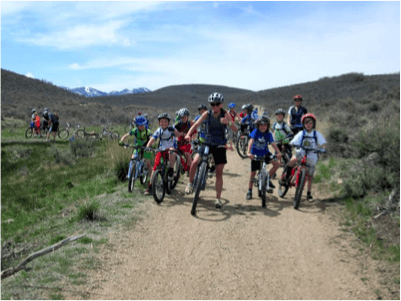
Group biking

What’s My Number?

At McPolin Elementary School, my number is 425, preschool through 5th graders. I work directly with the Lifestyles Counselor to provide quality instruction at our Title 1 school. We are a Spanish Dual-Immersion school. Although we live in an affluent resort town, 50 % of our students are on free or reduced lunch. We have Federal funding for free breakfast for all students and a healthy snack every day (See EATS program below). We have an Afterschool Enrichment Program for at-risk students, that provides a snack, a physical activity, computer, and homework sessions.

Some students go home to care for their younger siblings at night while parents work in a service job. Many have multiple families living in the same apartment. The challenge for me is to help provide a variety of opportunities for physical activities at school and in the community. I work closely with community agencies to provide access to programs that will benefit ALL of our population. The adage “it takes a village to raise a child,” definitely applies to our town. Many residents have stepped forward to benefit our diverse population.

A Master Teacher’s Influence Never Ends

The 3rd Annual Dr. Bob Frederick Sport Leadership Lecture Series took place on the campus of Lewis-Clark State College this past October. I started the series in 2013 to help students gain insight from leaders in the sport industry, and provide a glimpse into the number of career opportunities available to them. In three years, 44 presenters from sport-related fields including: interscholastic sport, intercollegiate sport, professional sport, collegiate sport recreation, municipal recreation, education, outdoor recreation, sport business, and sport governance, have kindly given their time and knowledge to the series.

Jump Rope

As I walked one of this year’s speakers, Dr. Mike Kinziger back to his car I asked him about his invention, the KINZI. The KINZI is a group jump rope where up to 40 people can play at one time. During his presentation, Dr. Kinziger mentioned that he had a prototype of the KINZI in his car and I was curious what it looked like. When we reached his car, he unloaded a long rope with a handle on one end. As I was asking him about how the KINZI worked and the type of games one could incorporate with it, he immediately seated himself in the middle of the parking lot. Using his body as the base, he began to swing the rope in a giant circle. A slightly amusing scene ensued as he looked up at me from the asphalt and shouted, “Start jumping.” Carrying a backpack, a stack of handouts, and wearing dress shoes I immediately began jumping to avoid tripping on the swinging rope.

When inviting speakers for the lecture series I often try to find professionals that have the ability to reflect on a lifetime of work and share that perspective with the audience. As a presenter, Dr. Kinziger had many experiences to draw from. He taught and coordinated outdoor leadership for 17 years as an associate professor in recreation at the University of Idaho. He led over 100 wilderness trips, holds six long distance canoe records, and has done numerous solo canoe adventures. In his retirement he reflected on years of teaching and wrote King Frog, a book containing more than 100 established group games.
Answering the “What Do You Do?” Question

(This essay was originally published on SHAPE America’s member Exchange [December, 2015] and is reprinted with permission.)

Does this scene sound familiar? You’re in a social setting and someone politely asks, “What do you do?”

Quickly the question morphs into a conversation killer if you answer, “I teach physical education.” A few seconds of uncomfortable silence follow. “What do you coach?” they ask, hoping for respite. “I don’t coach,” you say. Discomfort heightens. Blank stares. What to do?

What I Learned During Recess Today

I would like to share an incident that occurred while I was teaching the other day. At the time, I found the actions of one of my students to be unconscionable. Now, as I look back, I consider the incident both comical and pivotal.

It was a beautiful fall day, 65 degrees, clear with no wind, so we decided to take our classes outdoors. While I love being outdoors, teaching outside at my school does not provide for the best learning environment. The outdoor space consists of a grassy area the size of a soccer field, a small blacktop, and a playground. Therefore, during the lunch periods we are competing with the myriad of distractions that come with seventy-five children at play.

We were working on kicking a stationary ball, so we chose to kick a football off a tee. We used dynamic football warm-ups to begin the class. These warm-ups consisted of agility courses in which the students had to jump small cones, run through hoops, and zigzag through larger cones. Between the kicking stations and the warm-up, we set up 72 cones and 40 hoops. It took nearly a half hour to precisely line up all the cones and arrange all the colorful hoops.

Physical Literacy and Enjoyment: The Route to 50 Million Strong by 2029!

Most likely, few people would argue against the goal and necessity of 50 Million Strong by 2029. Indeed, many would view its importance as being critical to our future. However, as suggested by Steve Jefferies in his recent editorial, as a profession we have yet to make the extensive impact we’d like on the physical activity and health lifestyle choices of our students.

The Importance of Physical Literacy

We believe that the notion of developing physical literacy in students is vital to developing active, healthy lifestyles and, ultimately, the attainment of the 50 Million Strong by 2029 goal. Although definitions of physical literacy vary, it is commonly accepted that physical literacy is a holistic view of a person’s knowledge of how to move and the ability to do so with competence, their understanding of why activity is important, and the willingness and desire to be involved in physical activity on a consistent basis. If we want to be 50 Million Strong by 2029, surely this holistic view is a necessity. The 50 Million Strong by 2029 goal requires physical literacy and, similarly, physical literacy can achieve 50 Million Strong by 2029!

Aiming for Inspiring Teaching

Who among us would not like to be considered an inspiring teacher? What’s the secret? Phoebe Constantinou shares a slide presentation of the stages of development for becoming inspiring. A great resource for each of us to reflect upon or to share with others who would like to improve their teaching.

Click on the link below to download a PDF file. Be patient, it might take a minute or two

Constantinou_Aiming_for_Inspiring_Teaching-2