Category: PHE Current Issues

This category includes essays and articles on a wide range of topics. Read what’s good and what the challenges are about current teaching and coaching practices, and what physical and health education must do to thrive in the future. It’s a place to share, discuss, and debate ideas. Read and join the conversation.

What does successful PE teaching look like?

A few months ago I was invited to help review a middle school PE program. It wasn’t what I expected. I soon learned that some of America’s richest and best-known families pay a hefty sum to send their kids to this private school. I was intrigued to understand why. And it soon became apparent. The culture of the school was not what I expected. The hallways and classrooms were quiet. There was no jostling in the hallways between classes. No yelling in the cafeteria. Students were, well, studious. Learning was something they valued. And not only for test scores.

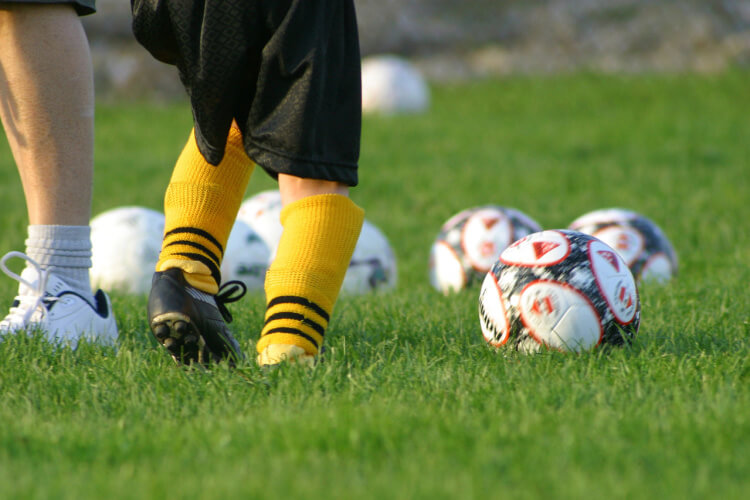
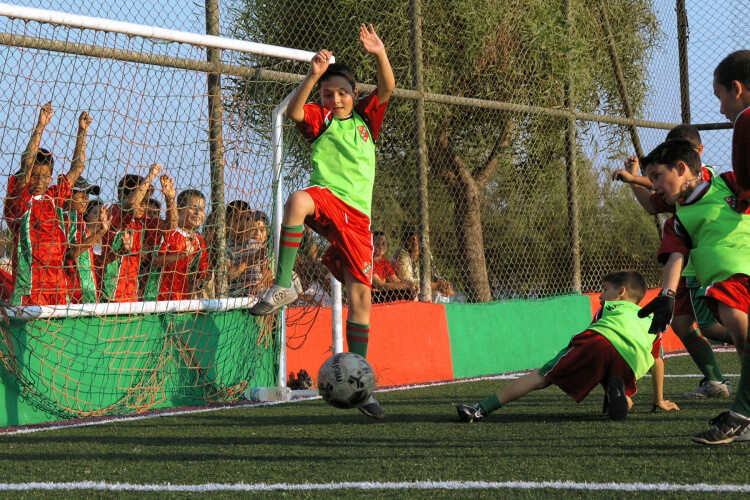
Kids playing soccer

As it turned out, more than 90% of the middle school students participated in the school’s after school athletic program. NINETY percent! Hard to believe huh? It was for me and of course I wondered why. What was the secret? If replicated nationwide we’d fast eradicate the obesity epidemic. I was especially intrigued about the contribution of the PE program.

It turned out that the school’s PE facilities were not especially impressive. The equipment was limited and mostly old. Little use was being made of technology. Neither national nor state standards were guiding assessment The curriculum was pretty conventional in fact rather dated. Among the PE teaching faculty there were huge differences in experience and teacher preparation. So, no big secrets revealed here.

The Power of Role Models

If you were asked to identify who your role models are, could you easily list the individuals and share the reasons why each has played such an important role in your life? Are these individuals role models because they’ve accomplished something you admire? Are these people your role models because they’ve modeled and encouraged ways to live your life that are helping you accomplish your goals and dreams? In observing your role models, are their ethics and morals clear in the advice and guidance they offer?

Role models are people who influence our lives through modeling positive life lessons (Whitbourne, 2013). Merriam-Webster dictionary defines a role model as “someone who another person admires and tries to be like” (Role Model, n.d.). Whitbourne (2013) argues that ethical role models are crucial in our lives because they help motivate and inspire people to engage in sound, ethical decision-making.

Is choice of a role model determined by the individual’s job title, their actions, their beliefs, or some combination of these elements? It seems that individuals who get more attention and recognition as role models aren’t always those whose behavior is considered notable or ethical, but rather are people prominent in the media because of their actions (Whitbourne, 2013). Hall of Fame basketball star Charles Barkley once said, I’m not a role model. Just because I dunk a basketball doesn’t mean I should raise your kids (Barkley, n.d.). At the time, his comments generated a lot of discussion about whether or not athletes should be viewed as role models. But as others have pointed out, given their visibility in society, do athletes really have a choice as to whether or not others see them as role models? (Lawhead, n.d.)

Promoting Your Physical Education Program, Part II

This article is the second part of a two part series. The first segment was published in the December 2014 issue of pelinks4u.

Active Classrooms

I encourage all physical educators to look for ways to add movement into the classrooms. Today, there are hundreds of brain break ideas on line. A simple Google search of “brain breaks” will get you quite a list. Depending on the level you teach, there are simple animated videos that the kids can follow along to at their desks. Or alternatively you can find ideas on brain breaks for older students, both that directly relate to a particular subject or not. Here is one great resources to get you started: Brain Breaks, Recess, & Classroom Based Activities. I’ve also linked below some ideas here from a few grade level classroom teachers in my building:

1st Grade Money Chant

No Excuses! A film about a transformation in Harlem – and the importance of quality PE

Tired of hearing excuses for why quality physical education is impossible when space is limited, class sizes large, students disinterested, and other reasons, we decided to do an “experiment”. We decided that if we could transform a “roll-out-the-ball gym class” approach in a school with plenty of barriers to quality physical education, we could honestly say that, “If you can teach quality P.E. here, you can do it anywhere!”
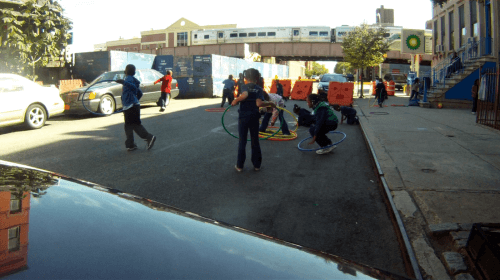
From the outset, we knew exactly which school to choose for our experiment. We had worked with the Storefront Academy in Harlem, New York before, and we knew that the school had teaching barriers that would be tough to overcome. They included a non-certified PE “teacher,” very limited indoor space, no playground areas, no free outdoor open space, and very little equipment. We decided to document the project in a film (directed by John Mathieu Roussell), and we called it No Excuses! We hoped that a film of this type would lead to increased awareness about quality physical education by parents and administrators, and to seeking solutions that focus on what we can do now, while continuing to work on changing the “impossible.” We wanted to help raise the bar so that all of us expect nothing less than quality in PE, for the sake of our students’ health, well-being, and academic success.

In the winter of 2011 we began working with the teachers and administrators at the Storefront Academy to retire the old ways of offering physical education and to develop a quality physical education program that fit the students’ current and future needs. We successfully sought out and obtained major support from SPARK (equipment, curriculum, technology, training), and hired a qualified credentialed physical education teacher for the next school year. At the end of summer, the teachers and most of the staff participated in SPARK training. We (Cathrine Himberg and John Roussell) spent our sabbatical that autumn in New York helping to implement the new program and documenting the process in our film. In Harlem, a coordinated school wellness initiative was in the making, with quality physical education at the center. Students started learning skills, concepts, and virtues in physical education chosen to help them now and throughout their lives. We made it safer and easier for them to choose to be physically active during recess on the blocked-off street that serves as their playground. We helped the teachers facilitate physical activity in the classrooms in the form of brain breaks. We made improvements in the cafeteria and encouraged nutrition education in the classroom. And we educated the parents about the changes and the important role they could play.
Values SHAPE America

First, let me introduce myself and justify why I might have anything worthwhile to say to the SHAPE America audience. Many years have passed since I was a teaching fellow at the University of Oregon in the same doctoral studies program as SHAPE America President, Steve Jefferies. For much of that time I’ve been ensconced in a liberal arts university, living the life of the university professor; happily teaching in the classroom, somewhat reluctantly serving in the college administration, and producing books with such esoteric titles as Contemporary Kinesiology and Health Ethics.

But it’s also true that in my dim and distant past, I received my teaching certification and experienced the life of teaching physical education. Given my world and worldview as a young teacher/coach back in the seventies in a comprehensive school in Oxfordshire, England, I’ve no doubt that public school PE teaching in the fast-paced world of contemporary America is very different. But I also suspect that some of the challenges and basic questions that I faced then and there are similar to issues you are encountering here and now. Similarly, although I have spent many years studying sport theory, I have also experienced the blood, sweat, and tears of coaching, both as the tennis coach at Wellesley College in the seventies and as the coach of the Women’s Soccer program at the College of William and Mary in the eighties. My point is that I have toiled in the trenches teaching students various physical activities and have had many years to reflect upon those experiences. So I was pleased when Steve asked me to share some thoughts and I’m hopeful that I can say something worthwhile to help shape SHAPE America.

Let’s take a journey (Destination: 50 million strong)
In his speech as candidate for President-Elect at the 2014 AAHPERD/SHAPE America Convention in St. Louis, Steve Jefferies suggested we should use the superb delivery system of a physical education teacher in every school to help us reach the goal of making “50 million strong,” meaning ensuring that the approximately 50 million young people in our schools are physically active and leading healthy lives. He identified a key ingredient to success in this venture as “a clear and unifying goal to strive for.” Because I share Steve’s concern for the future and have studied values intensively and extensively throughout my career, I plan to make this focus on a clear and unifying goal that we should strive for, the centerpiece of my essay.

Exploring the Future of Physical Education

One of the great things about technology is how its created more ways for us to communicate with each other. Face-to-face meetings may be more effective and enjoyable, but for many reasons we unfortunately can’t always get together at the same time and place. So this month, I’m pleased to be able to share with you a free online presentation that you might find interesting.

Time differences of course make it hard to join many presentations live. Fortunately, GOPHER Sport has recorded and archived its free monthly webinars online. It’s been doing this for more than a year. Take a look. I think you’ll be impressed by the topics and presenters – http://www.gophersport.com/webinar-recordings.

My recent presentation focused on where I think physical education should be going in the future. Since my participation in NASPE’s PE 2020 initiative a few years ago, I’ve become very interested in the future and especially in what it may hold for physical education.

In 2015, Let’s Track our Progress!

How many of you are planning to set New Year’s Resolutions this year?

  • Are you serious about setting them?
  • Are you serious about keeping them?
  • Are you serious about maintaining them after you reach them?