Category: PHE Current Issues

This category includes essays and articles on a wide range of topics. Read what’s good and what the challenges are about current teaching and coaching practices, and what physical and health education must do to thrive in the future. It’s a place to share, discuss, and debate ideas. Read and join the conversation.

High School Physical Education-Part 2: Going On Offense with Innovative New Programs and Online Options

This article is the second part of a two part series. The first segment was published here.

In Part 1 of this series, I described ideas for “going on offense” rather than “playing defense” with high school physical education programs. I suggested that we build strong standards based programs that show accountability. I also suggested the implementation of a strong fitness education program that adheres to the SHAPE America fitness education framework to bring credibility to our programs. Finally, I suggested that offering innovative electives is another key ingredient for taking an offensive approach. In this second article in the series, I offer additional ideas for “going on offense” including ideas for innovative new programs and ideas for quality online options.

Create Innovative New Programs

End of a Golden Era: The Demise of a PETE Program

We are sad and a bit angry – maybe even confused.

Due to significant falling enrollments it was decided by departmental and college administrators that we will admit the last class of PETE students in the fall of 2014, and class-by-class the program will disappear in four years. While the legacy of the program will carry on through those who have graduated over the years, our students will no longer walk the halls of our building or reside in our classrooms, gymnasium, swimming pool, or local schools. Our faculty will no longer engage in teaching PETE students or supervising field experiences. Those who retain their positions will contribute to the movement and sport science curriculum, if they are lucky. Some may decide to pursue positions elsewhere. Some may be dismissed.

Purdue is not the first large research-intensive university to announce the discontinuation of its PETE program of late. The University of Michigan (the first author’s alma mater) has also decided to close its PETE program doors. This troubling trend led a colleague from another institution to point out that “this appears to be another sign of the end of the golden era in PETE.” Yes, this is true for Purdue’s contribution to the State of Indiana in preparing future physical education professionals. The other twenty-one institutions in the state that prepare physical educators will carry on – at least for the time being.

You may be asking yourself “why did this happen and did we see it coming?” And you may be wondering if we tried to prevent the closing of the program, or if there is anything you can do to safeguard your program. The remainder of this essay will address these questions and related issues.

Common Core Denominators Challenge PHE Teachers

Ready or not, here it comes!  New teacher evaluations, high stakes student assessments, and common core standards have been implemented whether educators are ready or willing.  While most teachers out there are plenty able, the real question is whether or not we have the ability to find the time to figure out how to implement the new content, collect enough evidence, differentiate various artifacts, and decipher between SLOs, GLEs, EALRS, EOCs, CBAs, and any other acronym I may have missed!  These days it seems as though there is so much more to learn and do ourselves we may actually forget our true task at hand – teaching.  Honestly, when do you have the time to stop, collaborate, and listen? Wait, I mean to collaborate, collect, plan, assess, communicate, and analyze? What time is left for the actual teaching itself?


School districts across Washington State are now following evaluations provided by Danielson, Marzano, and the University of Washington.  I don’t know about your trainers for your chosen model, but ours have all made it clear that we are never going to be “Distinguished” teachers again.  Instead, we can all hope to be so lucky to be “Basic” and every now and again on good days “Proficient.”  While I do know I will continue to shoot for “Distinguished,” I must commit to being “Efficient” in order to keep up with the changing of the times.

What Keeps You Coming Back?

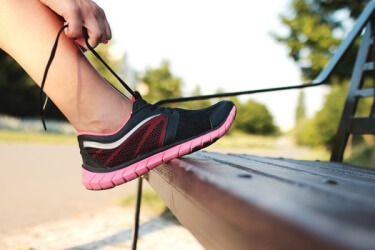
Recently, I was getting ready for the start of another school year. We all go through the same basic checklist: lesson plans ready for the first week, storeroom all set to get the equipment out, office put back together, and new supplies put away and ready to use. You may have even purchased a new pair of sneakers to start the year!

But let’s get to the deeper question. What motivates us to prepare every fall to begin a new school year? Why do we keep coming back year after year? Whether you are a rookie just starting out or a “seasoned veteran” who over the years has seen things come and go in education, why do you keep coming back? Why don’t you take a better paying job somewhere doing something else? Why don’t you retire the minute you are able to?

My guess is that we all got into teaching for very similar reasons. We wanted to help kids. We all liked being active in some ways ourselves and wanted to use that love of movement to teach kids the same appreciation.

Fired Up and Ready to Go

I looked down at the black fitbit on my wrist yesterday around noon, reluctantly tapped the face twice, and waited impatiently for it to respond. Soon the monitor revealed one full bar and a second slowly blinking back at me. Sitting all day is tough. I must have had an unsatisfied look on my face as I did the math…less than 1500 steps. I was frustratingly short of my 10,000 step daily goal. Last week while escorting my students up Mt. Si, a 4-mile hike outside Seattle with 4000 feet of elevation gain I had hit 10,000 steps before 8am. Sitting all day is tough. I had good reason to be sitting but I function much better when I’m moving.

I spent the past three days representing SHAPE Washington in St. Louis at the Leadership Development Conference (LDC). Aside from the inevitable seat time there were some obvious highlights. I met some impressive educators in our field from all over the country and used the many meaningful conversations to refuel my professional energy (it had taken a big hit over the last couple of months of school this year). I listened intently as some of the most respected leaders in physical education shared their collective vision for SHAPE America our newly structured national organization. I had the opportunity to sit in on a session by Dr. John Ratey, from Harvard University, as he discussed the abundance of research connecting moderate to vigorous physical activity to an increase in brain function. What he calls “miracle grow for the brain” could go a long way to making physical education a priority in our schools. It was an inspirational message.

However, what continues to rattle around in my brain today, as I fly to meet my family in California for what I think is a well deserved visit to Disneyland, is what our current SHAPE America president, Dolly Lambdin, challenged us within the first hour of the conference. After a painfully slow period of change within our professional organization (from AAHPERD to SHAPE America) that’s been at times both confusing and promising, our leaders have emerged from the experience with a visionary perspective. With CEO Paul Roetert, past-president Gale Wiedow, and president-elect Steve Jefferies providing their support, Dolly challenged us to consider an audacious national goal: All students in the United States will be physically active and healthy by 2025.

High School Physical Education-Part 1: Going on Offense to Improve Programs and Prevent Program Loss

This article is the first part of a two part series.  The second segment will be published in the next issue of PHE America.

Recently, I was asked to participate in a college class activity in which students “defended physical education” before a simulated school board.  I, along with several others, served as “board members” for this activity.  Different groups were asked to make presentations to the board concerning proposed exemptions for band and athletics, or proposed decreases in the physical education requirement.  The activity was realistic because we in physical education often find ourselves on the defensive.  Challenges to our programs “pop up” and, in the defensive mode, we prepare statements or appear before school boards to defend them.

In recent years, I have written position papers for submission to school boards (solicited by physical educators or prepared on my own), and have presented to a number of school boards to defend programs. After involvement in several program challenges, I have come to believe that by the time a program challenge has reached the school board agenda, the battle has already been lost.  Indeed program losses, especially at the high school level, have been significant over time.

Social Media in PE is No Marshawn Lynch

My local NFL team are Superbowl Champions. Last season the Seattle Seahawks dominated football and no one exposed the team’s superiority more than running back Marshawn Lynch. When Marshawn carried the ball and turned on “beast mode” more often than not he was a “game changer.” Fire, the printing press, electricity, transistors, and integrated circuits were game changers too. But social media?


In the last issue, I confessed my ignorance about the not-so-new forms of social media that seemingly everyone except me was using. It was time to get a Twitter account and as a few of you know I’ve since “tweeted” things I felt worth sharing. But I’m still puzzled. How the heck does anyone have time to read these twittering messages that pour on us in an almost continuous daily torrent? And that’s just the tweets, not even the information they point to. Apparently, today’s millions of Twitter users have huge amounts of free time waiting to be filled. Obviously I have time-management issues to resolve.