Category: PHE Current Issues

This category includes essays and articles on a wide range of topics. Read what’s good and what the challenges are about current teaching and coaching practices, and what physical and health education must do to thrive in the future. It’s a place to share, discuss, and debate ideas. Read and join the conversation.

Back to Basics Coaching and Teaching Physical Education

When our school district developed our “Injury Prevention Initiative” a little over two years ago (see November, 2011 article in pelinks4u, “An Injury Prevention Initiative Based Upon the Functional Movement Screen [FMS]”), little did we realize the impact it would make. We initiated this injury prevention program by mandating all athletic teams incorporate the recommendations into their warm-up routines. Since then, we have cut the number of surgeries resulting from athletic injuries by over 40%.

The results were so dramatic that I’m now hounding our district’s physical education specialists to begin using these functional movement exercises in all of our elementary and middle school physical education classes. My thinking is based upon the huge impact Gray Cook and Lee Burton have made with their Functional Movement Screen and the exercises designed to enhance FMS scores and athletic performance.

This fall, I came across an article and video, “Yes, kids are stars on the playing field, but can they do a push-up?” (Nancy Cambria, St. Louis Post-Dispatch, November 21, 2013). I was pleasantly surprised by what was in the article and attached video, and started looking at what’s happening in our society to our youth-their activity levels, outdoor time, and obesity levels. The focus of Cambria’s article was:

Social Networking in Physical Education: Connect and Follow

I grew up in a time when you answered the phone in the kitchen and had to pull the cord into other rooms if you wanted privacy. It was a time when you never would have thought to change the channel on the TV during a commercial because it meant getting up off the couch. I played “follow the leader” and “connect the dots.”

Now, I can talk on the phone walking down the street. I can use it to watch TV with or without commercials. And, I use it to connect and follow hundreds of friends and colleagues at the same time! Boy, have things changed!

This past year, I finally decided to jump into the Physical Education social networking world. It is a vast world of hashtags and links, videos and podcasts. I’m both overwhelmed and inspired. After hours, days, and months of friending, pinning, posting, commenting and tweeting, I still have not come close to scratching the surface of the physical education network on the World Wide Web.

So, for those of you perhaps contemplating joining the online social media frenzy, I’m going to introduce you to three popular ways of connecting – Linkedin, Twitter and Facebook. Now YOU can join in the fun!

Making Meaningful Sense of Play

Over the past several years there has been a renewed interest in the meaning and importance of play. Play has been featured in the New York Times Magazine, Taking Play Seriously, and in two fairly recent books, Stuart Brown’s Play: How It Shapes the Brain, Opens the Imagination, and Invigorates the Soul (2009), and Bateson’s and Martin’s Play, Playfulness, Creativity and Innovation (2013).

As part of my doctoral program in the early 1990s at The Ohio State University (Building a Bridge Between Athletics and Academics), I was fortunate to study the importance of play and many of the early play theorists. These included the 18th Century educator Jean Jacques Rousseau who in Emile wrote about the importance of play for children.

Rousseau began with the idea that children should be outdoors and active. In so doing, the child would develop his senses through his experiences. The senses would then provide the background against which ideas took shape. By moving and touching everything, seeing, and hearing, tasting and smelling, the child would begin to associate the objects of the external world with the five senses (Mechikoff, 2010, p. 160).

To Tweet or Not to Tweet?

I’m embarrassed to confess that now in my 16th year of publishing pelinks4u, I’ve managed to avoid, actually intentionally avoided, almost any participation in social media. In 1999 and a much younger person, I was on the cutting edge of online technology. Facebook’s billionaire founder Mark Zuckerberg was only 15 and probably a high school freshman. The Internet was in its infancy, still difficult to use, and its value unclear. A few years earlier, George Graham and his doctoral students at Virginia Tech conceived of a way to use the Web to promote physical education and in 1996 PE Central was launched.

Not long afterwards, I found myself on sabbatical planning one project but then being distracted and intrigued by the potential of the Internet. I saw it first as a way to link my college students with information they could use to improve their teaching skills. This idea then morphed into a newsletter sharing links, news, and opinions. Remarkably – at least in reflection – pelinks4u began as a weekly publication and continued that way until sanity set in and I switched to biweekly. Even more remarkably, it took a couple of years until the present monthly publication schedule began.

When pelinks4u started I did all of the information gathering and HTML coding myself. Fortunately, through the support of several generous site sponsors – many of which continue to support pelinks4u today (thank you) – I was able to get some assistance. Teaching colleagues volunteered to write teaching tips (also many thanks). But most notably Terri Covey began as the pelinks4u Webmaster while still a student. She’s continued to do it for many years now as a Central Washington University employee. Terri probably knows more about pelinks4u than me. Any credit I’ve received for pelinks4u actually belongs mostly to Terri’s truly outstanding dedication to the publication.

Summer Activities are a great time to relax, refuel and re-furbish

For most of us the school year is coming to a close. But for teachers, it’s a good time to reflect and think about what worked, what didn’t work, and the reasons for both. To get a head start for the next school term, I find it helpful to create a calendar with large space blocks to enter pertinent daily comments. Entries can include behavior issues, positive lessons, and accidents, parental concerns, or anything you think important for future use.

These entries can help remind you of past problems you can avoid and the details of events you might need in a future meeting. With the advent of smart phones and tablets, you can also easily add daily reminders and notes into an App. But, sometimes it’s also good to have a back up just in case of a technology glitch.

Before packing your bags for a much anticipated and probably needed vacation, I encourage you to plan what needs to be done to take you through the first week of teaching. Even the relaxing part of your summer activities can combine refueling and refurbishing too. For teachers, learning never stops. Observing what young people are doing helps us to better appreciate what makes our students tick, and how they’ll likely react to our teaching and the lessons we are planning to present to them.

A Tale of Two Contrasts: Being a Coach and Being Coached

I have been coached and I have coached. And the differences between these two experiences is a tale to be told.


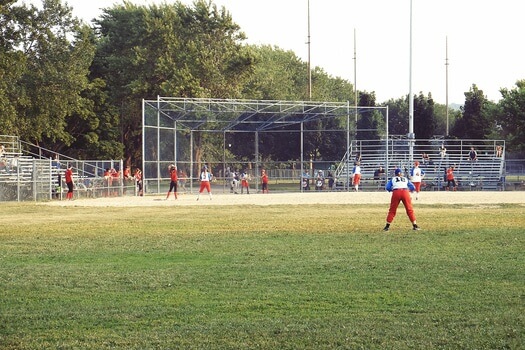
I am an athlete, maybe a little on the grey side, but still an athlete. I skate weekly and I was at one time a high level skater. But I was also an athlete in team sports. I played softball both slow and fast pitch. I was pretty good and pretty bad at the same time. As Frank Deford (2014) would say – I played real sport, the ultimate where one individual goes directly against another, mano-a-mano – where you must not only compete, but also compete against your rival’s attempts to stop you.

Service and Commitment Can Create Change

For the past three years, I’ve had the honor and privilege of serving as a member of the Executive Committee for The Society of Health and Physical Educators (SHAPE America), formerly the American Alliance for Health, Physical Education, Recreation and Dance (AAHPERD). I traveled extensively on behalf of our national organization and attended many state AHPERD and district conventions. These visits were both exhilarating and enlightening, and I had the opportunity to meet and spend time with thousands of outstanding professionals and future professionals in our field. It has been an experience that has changed my world view of our profession.

I discovered that people who attend state and district AHPERD conventions are dedicated professionals who are willing to serve the profession in a variety of ways. I learned that our state associations are strong and host top quality annual conventions. Successful lessons and innovative teaching ideas are shared openly and willingly. I was astounded at the willingness of members to serve as convention planners, officers, presenters, and on committees and task forces.

Our state associations are truly member driven and mission focused. Member driven in that the success of everything done at the state level is due to member efforts usually supported by a part-time Executive Director. These volunteers plan and develop all professional activities occurring at the state level. Without them, the professional development and networking taking place throughout the year would not exist.