Category: PHE Current Issues

This category includes essays and articles on a wide range of topics. Read what’s good and what the challenges are about current teaching and coaching practices, and what physical and health education must do to thrive in the future. It’s a place to share, discuss, and debate ideas. Read and join the conversation.

What are we Learning in PE today?

“What are we playing in gym today?” is in all likelihood the first question asked every day by every class in every gymnasium across the country and possibly the entire world. It may be an overly simplistic answer to the lack of respect for our content area, but conditioning students to ask, “What are we learning in PE today?” instead of “What are we playing in gym today?” would mark a small step toward educating the next generation about the merits of physical education.
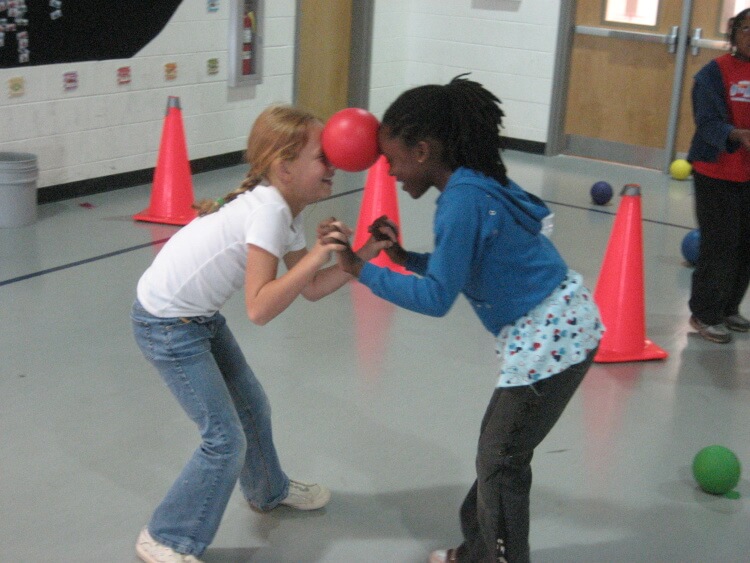
However, it then becomes incumbent upon us to be able to provide an answer to this new and improved question, each and every time a student enters our classroom. Our classroom, the gymnasium, while different in size and equipment, needs to look, feel, and operate like a learning environment. Allowing the educational hierarchy to view us as different, and more often than not as less important, guarantees that we will continue to remain educationally second-class despite the rising need for PE.

So what would it look like if we operated like a typical academic classroom, yet still stayed true to the physicality of our domain?


Advocating for Our Profession: Crafting Your Message (Part 3)

part 1 | part 2

In this three-part series of articles on advocating for our profession, I explained why we need to advocate and I focused on the single most important audience you really must plan to advocate to – your school board. In this last article I want to get down to the difficult but key task of actually creating an effective advocacy message.

But first let me restate my three rules of advocacy because I’ll refer to these three rules as I explain how to develop an advocacy message:

Secondary Online Physical Education: Walking a Tightrope

Nine years ago while serving on the Board of Directors of NASPE, a high-school teacher asked me for “our position” on secondary online physical education (OLPE). This Southwest teacher was concerned about his school district’s hasty adoption of online learning. He wanted to know more about online learning but felt conflicted. As an award recipient for his effective teaching and service on behalf of the school, department, and state association he said, “I feel like I’m walking a tightrope.” At the time, NASPE had no official position. We realized one was needed! This was a tipping point. The wonders of the digital age and online learning were intersecting with school physical education. More than a few physical education programs and teachers were being asked to transition from traditional, face-to-face teaching, to online instruction.

Subsequently, NASPE published a position paper entitled Initial Guidelines for Online Physical Education (2007). The skinny was that “no published evidence of OLPE learning existed, that OLPE should meet national standards for learning, that a hybrid model was a reasonable instructional alternative until research was available, and that OLPE was an exciting and attractive – yet untested – alternative to delivering quality PE.” Later, NASPE published the paper Appropriate Use of Instructional Technology in PE (2009). Reasonably, NASPE advocated technology as “a tool for learning if used appropriately for instructional effectiveness…that it could supplement, but not substitute, for effective instruction.”

As long as school physical education survives or thrives (see Mike Metzler’s recent pelinks4u essay for thoughts on this), physical educators will always be concerned about what to teach and how to teach. Recently, the Shape of the Nation Report (SON, 2012) reported that 30 states now grant credit for online physical education, however, only 17 states require certified PE teachers. It made me wonder who teaches these courses in the other 13 states? Some futurists predict that by 2020 half of all secondary education courses will be delivered online. If true, before long many school physical educators will be challenged to walk this instructional tightrope.

Adult Behaviors Should Guide Physical Education

Twenty-five years ago, the Assistant Commissioner of Education for New York State (L. Meno) asked all twenty-six content areas in New York public education (Math, English, Science, Social Studies, Music, Home Economics, Physical Education, and so on.), to justify their content area’s impact on “Adult Behavior.” In short, he was asking about the significance of each content area and why it was important to society. It was an interesting question. It forced us to question the impact and importance of physical education to ourselves and to society.

At the time, I was asked to chair the committee responsible for responding to the Commissioner’s request. It gave my colleagues and I a chance to reflect upon the impact of physical education on adult behaviors and to identify what was critically important about our content. Why should parents and community members be willing to continue to support New York state’s physical education requirement and be happy to fund it through their school tax dollars?

The question posed to us also assumes, and rightly so, that what we do in public school physical education with children has an impact on their behavior later as an adult. It made us think about the fact that when children have negative experiences in physical education it will likely result in negative feelings about physical education and physical activity as adults. Persistently scoring in the lower half of a fitness or skill test also risks negative outcomes. It seemed obvious to us in New York state that we had far too many parents and school administrators who after having negative experiences in physical education as children grew up unwilling to support the physical education as it currently existed.

It’s all about Student Learning! National Standards and Grade-Level Outcomes for K – 12 Physical Education

After three years of meetings, member reviews, and lots of re-writes, the National Standards and Grade-level Outcomes for K – 12 Physical Education are available on the SHAPE America (AAHPERD) website. This document was the work of the NASPE Curriculum Framework Task Force, which was charged with creating a framework (not a curriculum) that included the revised national K – 12 standards and newly developed grade-level outcomes. Physical educators had expressed a need for grade-level outcomes, which would fill a gap they saw between the standards and curriculum development.

This gap existed because standards are intentionally written broadly to reflect what students should have learned at the end of their physical education programs. In contrast, curriculum development requires an understanding of what students should know and be able to do at various points along the way. By identifying what students should know and be able to do at each grade-level, the new outcomes are designed to provide the guideposts to achieving the standards and a physically educated (now “physically literate”) individual. The completed document serves as a framework for public school physical educators to use for instructional planning, as well as a tool for communicating with parents, administrators, and policy makers about what students should be learning in quality physical education programs.

The task force members included two university professors (Stevie Chepko and me), two practicing physical education teachers (Brad Rettig and Dan Persse), a Director of Physical Education (Georgi Roberts) and a retired teacher and well-known author (Shirley Holt-Hale). From the beginning we knew that creating a curriculum framework would not be a quick or easy project, but we were convinced it was an important one for the field and well worth our efforts. The great support we received from K-12 teachers, other discipline specialists, and AAHPERD reinforced our commitment to the project. In this essay I’d like to expand on the research and thinking that guided the task force in its work, and how with its focus on student learning, the standards and outcomes document can positively impact and strengthen the future of our profession.

Solving the Teaching Skills vs. Getting Students Active Conundrum

PE Teacher: Should our focus in physical education be on teaching skills or getting students physically active?

PE Philosopher: Yes

I recently listened to America’s PE and sport philosopher-laureate Scott Kretchmar and just as intended it made me think. To the delight of our diminishing but indispensible cadre of PE philosophers, the seemingly frustrating and unresolvable conundrum that physical education teachers face is in fact answerable: Well at least from a philosopher’s world view!

John Massengale: Professional Leader, Colleague, and Visionary

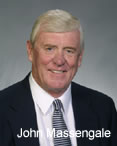
John Massengale, Professor Emeritus of Kinesiology at the University of Nevada, Las Vegas, passed away at home on November 27, 2013. John was a good friend to many of us in NAKHE and other professional and academic societies, a mentor to still more, and a leader in kinesiology who helped to develop the profession of physical education into the discipline of kinesiology. He will be missed by all who knew him.

John D. Massengale was born in Pontiac, Michigan in 1939, and grew up in the Detroit area aspiring to be an athlete. After graduating from high school in the late 1950s, John moved to Missouri where played football at Northwest Missouri State University and studied physical education and sociology. This was the beginning of a 50-year academic career that revolved around sport, physical education, coaching, and higher education and which lasted until his retirement in 2008.

John’s first professional duties were as a high school physical educator and coach from 1963 to 1967, first in Kansas City and then in Illinois where he earned his masters degree at Illinois State University. In 1967 John moved to Albuquerque, New Mexico, where he studied for his doctorate while working as an assistant football coach and adjunct instructor of physical education. It was at this point that John demonstrated the ability to balance his professional life as a coach with his academic life, a skill that the developing field of physical education promoted and which many of his contemporaries aspired to, but which few mastered as well as John.

John was proud of the New Mexico doctoral program of that period and spoke fondly of his days there as a student. He often noted that all of the graduates in his cohort at New Mexico either became a department chair or senior academic administrator, or published textbooks in physical education. Led by faculty such as Larry Locke, John’s fellow students at New Mexico included Ron Feingold, Chuck Corbin, and others who would became well-known scholars in our field.