Category: PHE Current Issues

This category includes essays and articles on a wide range of topics. Read what’s good and what the challenges are about current teaching and coaching practices, and what physical and health education must do to thrive in the future. It’s a place to share, discuss, and debate ideas. Read and join the conversation.

Seymour (Sy) Kleinman: Remembering A Visionary Leader in Physical Education

Physical Education recently lost a visionary leader with the passing of Dr. Seymour (Sy) Kleinman (August 21, 1928 – December 21, 2013). Sy was a mentor and friend to many who had an interest in a holistic, movement centered approach to physical education. Dr. Kleinman was my mentor at The Ohio State University and helped shepherd me though my doctoral studies. We had much in common including a background in dance education and performance, and an interest in developing sports performance programs for college athletes. It is primarily because of Sy that I was able to pursue a life and a career in higher education in the Movement Arts and Sciences, and beyond.

Sy, who retired after nearly forty years of service as a professor of educational policy and leadership at Ohio State was a pioneer and leading authority in the field of somatic studies. He was also a passionate advocate for the arts in education and led the Institute for the Advancement of Arts in Education at OSU for several years. I actually served as a graduate assistant for the Institute during my first year at OSU and witnessed first-hand Sy’s passion for helping teachers embrace the importance of the arts in education.
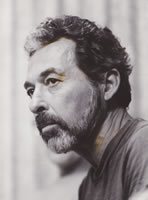
Dr. Kleinman received his Bachelors of Arts and Masters of Arts in physical education from Brooklyn College. He earned his Ph.D. from Ohio State in 1960, followed by a year as a Fulbright Scholar in Finland. From the 1960s to his recent passing he and other faculty moved the College of Education at OSU into a leading center for somatic studies.

His academic output included five books and forty-four articles. He was a visiting lecturer and led groups of students to Denmark five times from 1982 to 1995. He received the Intellectual and Visiting Scholar Award from California State University, San Bernadino in 1996. He also held a chair for two terms in the Philosophy Academy of the American Alliance for Health, Physical Education, Recreation and Dance.

Advocating for Our Profession: Presenting to Your School Board (Part 2)

Advocacy is preventive medicine and in this second in a series of three articles on advocating for your profession it’s worth reviewing the first of the three rules of advocacy that I laid out in Part 1. The First rule of advocacy is Do Some – It Works.

For advocacy to truly be preventive you must do some and one of the best places to advocate is with your school board. School board meetings are public venues where a wide range of decision makers and policy influencers are present. It’s a perfect setting in which to direct and influence the discussion and understanding of health, physical activity, and the role a quality physical education program plays in the development of our children. When and what you present to the School Board will be crucial in determining how effective your advocacy is and whether it is truly preventive medicine.

In my previous article, I pointed out the parallels between martial arts and job protection and made the case for an offensive-defense strategy. In martial arts you want to make your opponent think twice before even attempting to hit you. In physical education, offensive-defense is what you do when times are good to ensure that your district will not even consider attacking your program during tough economic times. The time to advocate with your school board is not when there is trouble but when things are going well and you have a positive story to tell.

Is Physical Education Heading Towards Extinction or a Renaissance?

I appreciate Steve Jefferies’ invitation to respond to his editorial in the October 2013 issue of pelinks4u. What follows is less of a direct reply to his editorial than a set of thoughts about the current state of P-12 physical education and some possibilities for its future. Steve started his editorial by noting several positive developments taken from the 2012 Shape of the Nation Report and other stories about encouraging policy changes in a growing number of states. These included a 10% increase in the percentage of school districts requiring elementary school physical education over the past 12 years, a near doubling of the percentage of states providing lesson plans and tools for evaluating students’ progress in middle schools, and a 20% increase in districts adopting policies requiring schools to follow national, state, or district standards.

Other evidence of the increased attention given to the importance of physical education in schools can be found in almost every type of media: newspapers, magazines, web sites, blogs, social media, local television, and even network television programs that are seen by millions of viewers. The 2013 report by the Institute of Medicine strongly supported a “whole school” approach to physical activity learning in schools, and has been read widely by state policy makers, school boards, school administrators, and many advocacy groups. Never before in its more than one hundred years of inclusion as a school subject has physical education been more widely viewed in a positive light by so many different groups -parents, policy makers, health professionals, school administrators, students, classroom teachers, private foundations, and public agencies.

While Steve suggests that this newfound attention might not be a good thing, personally I welcome this improved public perception of the value of our programs in schools and think that our profession can accomplish much more from being in the limelight than we can from being in the margins: A place we’ve been in for too many years. Everyone likes the underdog, but when it comes to our profession, I’d much rather see us in the role of “favorite” because that gives us more opportunities to serve children and youth, and to make a real difference in the quality of their lives.

A Profession in Transition

I love my kids. I’m talking about my own kids. My children. I think about them every day and I realize I don’t tell them often enough that I love them. They are good kids!

This probably strikes you as an odd way to begin an article about our profession and about the future of our professional association but let me explain. Both my son and my daughter are now adults and finding their niche in life. They have families of their own and they face many of the same challenges most of us did as we worked through the early years of our adult lives.

Significantly, my daughter changed her name! She gave up her maiden name, the only name she had ever known, and took a new name. This marked the next chapter in her personal evolution toward self-actualization, self-fulfillment, and creating her lasting personal legacy. Even before she changed her name she was an exceptional person- caring, loving, fun, dedicated and professional.

How to Stay Healthy this Holiday Season

The holidays are a great time for families to get together around the dinner table to share memories and enjoy each other’s company. Only later, while slouching on the couch to decompress do the negative health consequences of our increased holiday food consumption begin nagging us. And during these moments of reflection we start to think about physical activity strategies to help us work off these extra food and drink calories. Well, it doesn’t have to be this way. Instead of waiting for these guilty feelings why not plan ahead and help others along the way?

The first step is to make a plan and then stick to it. That sounds easy but it’s going to take some navigation and guidance to proceed in the proper direction. Fortunately, help is on the way from today’s ubiquitous electronic devices and apps that are both useful and fun to use. Physical educators can be a great source of advice for teaching colleagues, families, and students in helping them to engage in appropriate health promoting activities.

To accomplish this task, it’s wise to create a plan that involves others such as family members or friends who will act as coaches and motivators to help us stay on the right path. These ideas can be posted in a blog, or shared as reminders, fitness calendars and online information web site links. Potential topics of advice could include a combination of health, exercise, nutrition, first aid and injury prevention information. As a physical education teacher, I found it to be an effective strategy to make a calendar or bulletin board to help others track their activities and healthy food choices. During the school break for the holidays, health and P.E. teachers can be a viable asset for carrying over health-promoting information into the holidays. It could be homework or simply advice. Fortunately, today there are some excellent online resources you might like to personally check out and then consider sharing.

What Should We be Doing in Physical Education?

After many years as a physical educator, I’ve learned that three key ingredients have to combine for students to successfully learn athletic skills or improve their physical abilities; potential, effort, and opportunities. Eliminating or limiting any of these parts drastically reduces a student’s chances of success. Even more importantly, I’ve also learned that as a teacher I can most directly influence the creation of learning opportunities.

Potential involves a combination of genetic factors, environment, and prior experience with the skill being attempted. For example, it’s likely that a student who is shorter will find it difficult to out-rebound a taller player. People who tend to be better jumping hurdles have longer legs and gymnasts tend to be shorter and muscular. When it comes to environment and prior experience, if I have students who have spent time at softball tournaments watching parents and siblings play, they tend to have greater know-how and aptitude when it comes to swinging bats versus peers who have never held a bat or seen a game.

We also know from research that there tends to be a transfer of skill between certain types of activities. Doing activities that have similar elements to previously learned skills affects how one performs. Students in my classes that pick up unicycling the quickest tend to be skateboarders first, horseback riders second, gymnasts third, followed by everyone else. In all likelihood, they learned faster because of their prior involvement in balance oriented sports. Being familiar with the environment, like surfers living near the ocean or skiers in the mountains, influences people’s potential to achieve. A Sherpa used to living at a higher altitude has a body better prepared to climb higher on Mount Everest. Clearly, physical educators and coaches have very little control over genetic and experiential factors such as these that affect a student’s performance potential.

Integrating Common Core Standards into Physical Education

The Common Core is a national movement to adopt common standards and assessments for English language arts and mathematics. These standards aim to create assessments that will not vary among states and will determine whether students are meeting those standards. Common learning goals provide a clear direction for what educators and parents should aim for. It creates a level playing field for all students independent of the state they reside in. Common Core Standards are designed to make the student college and career ready. The goal is to have the students succeed in a global economy and society. Students are provided with rigorous content that creates an environment in which they have a deeper level of understanding.

A common response when physical education teachers are told that they need to incorporate English Language Arts and Mathematics into our curriculum is frustration. We’ve become accustomed to doing things that work well for our students, and us and heard the call to keep our students moving as much as possible. Then about the time we get comfortable with what we’re doing, it seems that learning standards change or a new curriculum is adopted and we’re expected to do something different. The adoption of the common core standards has brought a huge paradigm shift in education. Teachers are being asked to get their students to think in different ways and to demonstrate a deeper level of understanding. With the common core’s primary focus on English Language Arts and Mathematics, physical educators, not unexpectedly, are concerned about how this is going to affect their teaching.

As states and school districts deliberate ways in which they can effectively integrate common core standards into instruction, it’s vital for physical educators to be part of the discussion. Something we should have learned from the introduction of No Child Left Behind (NCLB) more than a decade ago is that we put the future of our profession in a precarious state if we allow ourselves to be excluded from educational reform efforts.