Category: PHE Current Issues

This category includes essays and articles on a wide range of topics. Read what’s good and what the challenges are about current teaching and coaching practices, and what physical and health education must do to thrive in the future. It’s a place to share, discuss, and debate ideas. Read and join the conversation.

Marketing Physical Education

Think about your favorite restaurant. What is it about that particular restaurant that makes it your favorite? Chances are it is the combination of quality products, good service, and a great atmosphere that keeps you coming back for more. If any one of these three areas were below standard would you return? You’d probably think twice before recommending the restaurant to your friends.

Now think about your physical education program. Your students may or may not have a choice whether or not to frequent your classroom, but if you are trying to promote your program, then satisfying customers should be your first order of business.

First, take a look at your product. Do you have a quality physical education program that has a variety of skills on the menu? Although students often seem to prefer to play certain games, remember that they only know what they have experienced. Varying your content and using a variety of strategies, technology and also differentiating the instruction will keep students from getting bored and will motivate them to move with purpose. Furthermore, students who find your classes intellectually as well as physically challenging will be more likely to talk about, “What they did in PE today,” to their parents.


Should we be Concerned about Increased Public Support for Physical Education’s Mission?

In case you missed it, there was what appears good news for school physical education and its mission this fall. Here’s a sampling:

According to a CDC report, the worrying perceptions many of us have had of ongoing program and position cuts and declining support for K-12 physical education were wrong. In the recently released 2012 School Health Policies and Practices Study (SHPPS), a 10% increase was reported in the percentage of school districts requiring elementary school physical education over the past 12 years.

At the middle school level there was almost a doubling of the percentage of states providing lesson plans and tools for evaluating students’ progress. And nationwide there was a 20% increase in districts adopting policies requiring schools to follow national, state, or district PE standards.

Preparing for the New School Year

The title of this article is one that could be deceiving until you understand what I mean, and how it should be food for thought. Preparation (for the new school year) should have started many years ago in the college years by acquiring pride in physical education, and the planning it took to become a teacher. As I regress, having retired in 2003, I can look back over many successful years and why they were successful. What made them so extraordinary?


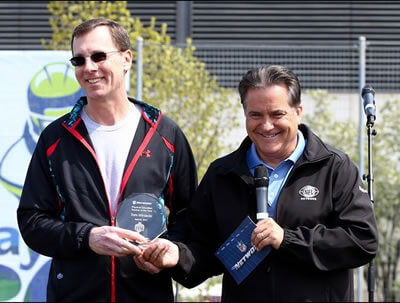
NFL Network Physical Education Teacher of the Year

I was fortunate enough to have been named the 2013 NFL Network Physical Education Teacher of the Year. The whole experience was something I will never forget! From filling out initial paperwork, to participating in a phone interview, to actually getting the phone call saying that I had been selected, was a memorable process.

It all started with writing some essays describing my teaching. Writing can be a bit of a hassle, especially in our profession. We don’t often think that there is a place for writing in our work. We are, after all, in the business of creating people that learn to enjoy how to move in ways that benefit them. We strive to teach in a way so that things can make more sense to our students. Just like any other subject, the more you understand the more you learn to enjoy it. By seeing the connections between activities clearly you develop a better understanding! On the surface, writing in class would seem to take away from our primary mission of teaching students to enjoy moving. But there may be a place for it.

One side note on writing. Our district has decided that writing is so important that it should be included in every subject. They describe it as “talking out of the tip of a pen.” To their credit, they did not dictate to us how often and how much writing each subject should include. They basically left it up to us. All they asked is that we look for the best place to include it. Where did it make the most sense to include writing? We were allowed to come up with those answers.

A Dream for Physical Education

I write this preparing to fly to Singapore to attend the country’s biennial conference for physical education teachers. Smaller than most US states, Singapore’s education system is government coordinated and dedicated to sustaining the future needs of one of today’s most successful Asian nations. Supporting this mission, the country’s physical education leaders are focusing on creating effective school PE programs that will reverse the sedentary living trends threatening the nation’s health. It’s no easy task. Similar to the US, obesity is trending upwards in Singapore. And Singaporeans, like most nations worldwide, are seeking solutions.


For two reasons, as a physical educator I’m not inclined to take much responsibility for worsening obesity. Obesity’s tripling over the past 30 years has paralleled most of my professional career – a spectacularly unimpressive record that I’d prefer to ignore. But more importantly, physical educators simply don’t have much control over most of obesity’s causes. Reports of worsening obesity do however alarm me, because it is symptomatic of declining physical activity and physical activity is something that I do believe physical educators should be trying to promote.

Physical Education: Nothing Lasts Forever

Last month, I suggested that the newly created Let’s Move, Active Schools initiative offered physical educators a special, necessary, but time-limited chance to transform K-12 physical education. I’m optimistic that some teachers will respond to this challenge, but concerned that for far too many business will continue as usual. It worries me when colleagues assume that physical education’s future in public education is somehow guaranteed. It isn’t. Ask any of the dozens of teachers around the country whose programs and positions have been cut in the past few years.

Like most of us, those teachers assumed their jobs were secure until suddenly, and often with little warning, they found themselves victims of the current obsession to raise academic scores, or victims of budget cuts resulting from the economic recession. Too late and without much support they protested their relevance. Instead, they discovered that many education decision-makers neither appreciated nor valued physical education’s contribution to children’s education. Like switchboard operators, typists, milkmen, travel agents, elevator operators, and others in vanishing professions, these unfortunate physical educators learned that nothing lasts forever.

Physical educators are forever destined to be the victims of the decision-making whims of others unless we show more initiative in shaping our professional future. It was this desire that motivated the creators of NASPE’s PE2020 initiative that began in 2011 with a national forum at the San Diego national AAHPERD Convention. The resulting recommendations proposed a framework for futuristic thinking. Since then, some of the suggestions have contributed to a rethinking about where physical education should be headed.

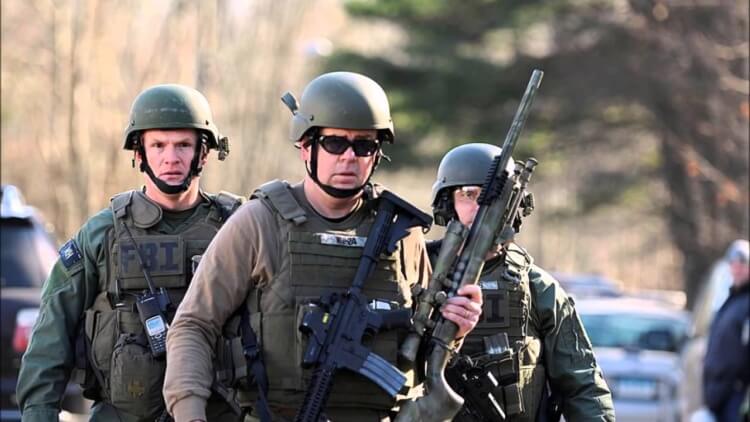
Sandy Hook, School Shootings, and NRA Proposed Solutions

Sadly, the anticipation all of us shared for a joyful and peaceful Christmas was shattered by the Sandy Hook Elementary School shootings. As educators, an event like this was especially traumatic because it could have happened to any one of us who spend much of our time in our nation’s schools and colleges.

school shootings

Since the shootings I’ve once again tried to comprehend America’s addiction to guns. Although originally from England, I’ve now lived in the US for more than 30 years. It’s been my home for more years than many native-born ardent gun supporters. I’ve listened to, and read the views of gun advocates. I wish I could dismiss them as a tiny crazy minority, but of course most of them are quite sane and their views are widely held. They just hold beliefs that I’ve found pretty much anyone who has lived outside the USA finds incomprehensible. I certainly do.

It’s not surprising then that the recent proposal by the CEO of the National Rifle Association to place armed guards in every school alarmed me. I wondered how much time he’d spent in and around our public schools.