Category: PHE Current Issues

This category includes essays and articles on a wide range of topics. Read what’s good and what the challenges are about current teaching and coaching practices, and what physical and health education must do to thrive in the future. It’s a place to share, discuss, and debate ideas. Read and join the conversation.

Advocating for our profession. Is anyone listening & do we really need to do it? (Part 1)

We have all had the following experience; you have just finished what you felt was an outstanding presentation to your students and as you gaze at their faces you would bet your next paycheck that not a one of them really listened to anything you just said. Interestingly, if you made that bet you would likely lose that paycheck because most of us who have taught for a fair length of time have also had another type of experience. Years later, a student you viewed as a “slacker” and who you would have sworn was not taking your lessons to heart comes back to visit, and much to your surprise they are in great shape and doing well, and tell you how much your PE class helped them.

Advocating for your profession, similar to teaching, can sometimes seem like a fruitless effort. While passionately advocating for what we believe in we secretly doubt that the message is getting through. Advocacy is also like teaching in that the results of what we do are rarely immediate and almost never predictable. Trying to predict when and if that student who appeared disinterested in your classes will take your message to heart is impossible but we deliver the message anyway. To further our chances of success most teachers also learn to deliver information frequently and consistently. When I taught middle school our 6th graders did not really seem to understand the sermon of health and fitness that I was preaching but somewhere in the following three years, after repeated exposure, I discovered that the vast majority of them saw the light and started to understand the importance of maintaining their health and fitness.

Recently I went through an advocacy scenario that followed this pattern. My district eliminated one of our two elementary school physical education positions. I wrote a letter to the superintendent before it happened and advocated for the re-instatement of the position after it had been eliminated. No immediate result was evident and I was sure that the message had fallen on deaf ears. One year later the position was restored. Now I am not claiming that my advocacy alone accomplished this or even that it was the leading cause (many other people also spoke up including elementary class room teachers), but it was part of the effort and in the end someone listened.

2013: What Has Happened In Physical Education?

As we near the end of 2013, I decided it would be interesting to highlight some of the year’s most interesting and impactful professional events. Here’s my top 10 list:

    1. 2012 Shape of the Nation Report: Status of Physical Education in the USA
      Okay, it was actually published at the tail end of 2012 but since it only happens every couple of years this interesting survey gives a status update of physical education in American schools. Checkout what’s happening in your state and around the country.
    2. School Health Policies and Practices Study 2012
      Despite fears that physical education programs are in decline, this study from the CDC suggested otherwise. A 10% increase was reported in the percentage of school districts requiring elementary school physical education over the past 12 years. At the middle school level there was almost a doubling of the percentage of states providing lesson plans and tools for evaluating students’ progress. And nationwide there was a 20% increase in districts adopting policies requiring schools to follow national, state, or district PE standards.
    3. Institute of Medicine Report: Educating the Student Body: Taking Physical Activity and Physical Education to School
      It’s always nice to have others outside the profession advocating for what you do. What better than to have the highly respected Institute of Medicine, not only recommend 60 minutes of daily physical activity for schoolchildren, but also to suggest to the Department of Education (DOE) that physical education should be designated as a core school subject. Here’s a summary of the report’s recommendations.

  1. Let’s Move, Active Schools
    Who better to advocate for physical education than the wife of the American President? In the creation of this new school-focused initiative, Michelle Obama succeeded in bringing together businesses and school focused organizations including AAHPERD. With Nike committed to a $50 million five-year supporting donation, physical educators have a unique but time-limited opportunity to transform the physical activity climate of their schools and make physical education the foundation.
  2. American Academy of Pediatrics Endorses Crucial Role of Recess
    This esteemed medical authority highlighted the cognitive, emotional, physical, and social benefits of recess, noting that it afforded a time for children to rest, play, imagine, think, move, and socialize. The Academy noted that research has found that after recess children are more attentive and better able to perform cognitively.
  3. Obesity Changes: Mixed Messages
    The year in obesity saw some rare positive news with a report of declining obesity trends among preschool children. Conversely, we learned that more than a third of students in Western New York State are overweight or obese. It was further reported that obesity continues to be problematical among military personnel and more and more are failing to meet required fitness tests. Worryingly, another study suggested that obesity was likely to shorten life by nearly 10 years for Americans.
  4. New National Physical Education Standards Released
    In 1986, NASPE defined what a “physically educated individual” looked like. Shortly thereafter, the profession saw the creation of national standards – a huge boost that put us on par with other academic content areas. This year witnessed the publication of new standards that most significantly have adopted the phrase “physical literacy” as a key component.
  5. PEP Grants Continue to be Awarded
    For the 13th successive year the US Department of Education supported the development of quality physical education through its PEP Grant Program. This year there were 60 recipients receiving a total of nearly $32 million.
  6. AAHPERD Unified
    After years of painstaking deliberation and debate, the alliance of five national professional associations that included NASPE agreed to unify to form one national association. With the majority of Alliance members working in physical education, the new association has adopted the vision statement of “Healthy People – Physically Educated and Physically Active!”
  7. SHAPE America Created
    It might take a little getting used to, but the new name adopted in November for AAHPERD is the Society of Health and Physical Educators – SHAPE America. The thinking behind the word “shape” in addition to it being an easy to remember acronym, is that our new professional Association will focus on influencing and communicating the value of what we as members do.

Well that’s my 2013 year-in-reflection list. Perhaps there were other professional events you’d choose to include? Well, you have the chance! At pelinks4u we love to hear your views and share your news. If something is happening in your state or school district that you think might interest your teaching colleagues let us know. We’d especially like to include stories illustrating exemplary physical education programs and teachers. Published stories on schools are great public relations and advocacy events. Please contact us with your ideas.

Grading as a Motivator

After reading an Op Ed essay in the New York Times about how routine it has become to give kids trophies and how meaningless, too, I thought of the year I transferred to a “REDBOOK” school of national excellence, with a much heralded principal who took the time to come to all gym classes to tell them that they are all “A” students, and make it clear to me that 98% of the student body passed “gym” every year. I cannot tell you how excited I was to be working with such a great group in such a great school. It took just a few weeks for the truth to reveal itself.

Classes, mine and everyone else’s, had 20% sitting out every day. After recognizing the extent of the apathy, and how none of my colleagues seemed to mind, I knew if I was to get the kind of participation I was used to I needed to change the culture – something which would take a while and likely be a shock to a few people. Knowing full well that it would be politically incorrect to rock the boat, and if I didn’t I would be a very well-paid babysitter, I instead opted to teach – not to cheerlead – once again. Again you ask? When was the first time?

Background

PE’s Got Talent: How to Advocate for Quality Physical Education…Really

Want a fall activity that is student centered, standards based, creates authentic, exciting, entertaining learning experiences that can be used K-12 and demonstrates the quality and importance of a Physical Education Class? Try a PE’s Got Talent show based on the popular TV series “America’s Got Talent.”

America’s Got Talent sparked my attention and inspired me because of the number of acts that included some type of physical activity or physical skill. Twenty-six of the sixty-one contestants invited to perform in New York City demonstrated some type of physical skill. The acts were amazing and included, dance, rhythmic activities, feats of balance, and displays of strength. Now children are emulating these performances.

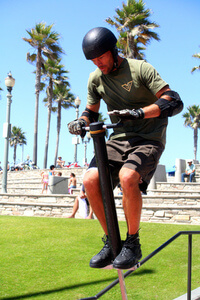
Recently I noticed a group of students doing tricks on pogo sticks while another was riding a scooter in patterns around them. All in front of a panel of judging peers. In this article, I’ll explain how a PE’s Got Talent show can be implemented, and suggest ways for not only showcasing the benefits of Physical Education but also demonstrate methods for keeping students motivated to participate and hopefully be more active outside school as well.

Thoughts about SHAPE America

Since AAHPERD president Gale Wiedow announced the proposed new name for AAHPERD, similar to Chuck Corbin I’ve had mixed personal feelings and heard both positive and negative comments from others. But on one thing we can all agree. For our professional association to move forward it’s pretty obvious that everything can’t stay the same. So it makes sense that we should consider a new name.

As a former NASPE President I confess I’m pretty attached to the NASPE name and its public recognition as the professional association for physical educators. A few years ago our Canadian colleagues converted themselves to PHE Canada – a name that I also like but recognize that the thought of copying Canadians would be an anathema for many Americans! More recently, our nutrition colleagues renamed themselves to the daft sounding acronym “AND” yet it doesn’t seem to have negatively affected their 75,000 and growing membership.

So where does that leave me? For the past few years I’ve spent much of my time deliberating about the future of public school physical education. It’s something that concerns me, especially in this era of rapid and often irreversible change. I’ve asked myself not only “What is the future of public school physical education?” but more worryingly, “Is there a future for public school physical education?” Of course I’m convinced that there is a need for America’s youth to be physically educated, but worried about the status and support for physical education and the teaching profession.

Society of Health and Physical Educators, America (SHAPE America) Gets My Vote

Roberta Park, a noted physical education historian, has suggested that physical education (and I would also include health education) can become the renaissance field of the 21st century. She makes the case that medicine was a fledgling field prior to 1900, but became the renaissance field of the 20th century. The development of the medical sciences, strong delivery programs (treatment, prevention, and promotion), strong medical training programs, and a strong professional organization were the keys.

At this point in our professional history I believe that Park makes a good point! Health and physical educators are primed to do good things in the years ahead. Our ever-evolving scientific base has grown in recent years, just as medicine’s did in the previous century. We have the support of major medical groups (AMA, AHA, AAP, IOM), governmental groups (CDC, PCFSN, USDHHS), and other well-known public and professional organization (ACSM, NFL, NAK, NAKHE) to name only a few. In addition, the prestigious Institute of Medicine (IOM) recently published two reports related to our field. New standards for teacher education bode well for improved teacher education in our field, a necessary prerequisite for the type of success enjoyed by the field of medicine.

Major initiatives have been implemented in support of Comprehensive School Physical Activity Programs (CSPAPS) with quality physical education as the centerpiece (CDC, AAHPERD). Comprehensive health education is also a strong priority of the CDC and other groups. We have a new cooperative agreement for a Presidential Youth Fitness Program (PYFP) supported by multiple cooperating agencies including AAHPERD, Physical Best, the President’s Council, the Cooper Institute (FITNESSGRAM®), AAU, CDC, and the new National Foundation for Fitness, Sports, and Nutrition (NFFSN). Parental support for health and physical education is also strong. According to a Harvard survey, more than 90% of parents support health and physical education in the schools.

Exploring the -isms: Tips and Techniques to Use When Teaching about Racism and Sexism

Introduction

Teaching is both a skill and an art form. Creating an environment that supports student exploration and growth can be a daunting endeavor especially when the topics of conversation are challenging. Creating a safe space where people feel comfortable to share their perspectives on sensitive issues is difficult. In the classes I teach, I often focus conversations regarding the impact of –ism’s – i.e. racism, sexism, classism, etc. – on thoughts and actions. It’s often challenging to facilitate open and honest discussions on subjects like these not only because the topics are sensitive to address, but because students are hesitant to share personal perspectives for fear of offending classmates.

Often my students will say things like, “Dr. Van Mullem….Why do we have to talk about this stuff? These things (i.e. racism, sexism, classism, etc.) are no longer a problem.” Many people are uncomfortable with exploring societal –isms because the -isms, in fact still are a problem. Society continues to battle prejudice every day.